
The FCC’s December 2025 update to the Covered List, adding foreign-produced drones and critical components on a going-forward basis, was not a ban, not a grounding, and not a disruption to current operations.
But it was a signal
A signal that unmanned aircraft systems (UAS) are no longer viewed as niche technology or optional tooling but as drones as critical infrastructure, directly tied to national security, supply-chain resilience, and airspace sovereignty.
In other words, this moment marks a turning point in critical infrastructure drone policy.
If federal leaders now acknowledge drones as infrastructure, then the next question becomes unavoidable:
Why are drones one of the only critical infrastructure sectors expected to stand on their own without meaningful affordability support during a policy-driven transition?
The Affordability Gap No One Wants to Name
Across the country, utilities, public agencies, transportation authorities, and infrastructure owners are being asked to do all of the following at once:
- Transition away from foreign-made platforms
- Adopt trusted, compliant systems aligned with government drone regulation
- Maintain safety, reliability, and operational scale
- Absorb higher costs during transition
At the same time, U.S. manufacturers are being asked to:
- Scale production rapidly
- Compete on price with globally dominant players
- Meet enterprise-level performance expectations
- Do so without the industrial support afforded to nearly every other strategic sector
This is the heart of today’s UAS policy gaps.
The burden of drone affordability and compliance is being pushed downstream onto operators, despite the fact that this transition is being driven by national drone policy framework decisions, not by market preference.
That is not how the United States has historically grown, protected, or stabilized industries it considers essential.

How the U.S. Supports Strategic Industries and Where Drones Still Lag?
A Side-by-Side Reality Check
| Sector | Type of Government Support | Policy Rationale | Outcome |
|---|---|---|---|
| Agriculture | Direct crop subsidies, crop insurance, disaster relief, and export incentives | Food security, price stability, and market volatility protection | Scaled domestic production, stable consumer pricing |
| Automotive & Advanced Manufacturing | Manufacturing incentives, EV credits, factory grants, workforce subsidies | Industrial competitiveness, job creation, supply-chain resilience | Scaled production, consumer cost offsets |
| Energy & Semiconductors (CHIPS / IRA) | Direct subsidies, tax credits, and long-term federal investment | National security, grid resilience, and technology independence | Accelerated domestic capacity, reshored supply chains |
| Unmanned Aircraft Systems (Drones) | Limited R&D grants, pilot programs, and fragmented procurements | National security, airspace sovereignty, and infrastructure protection | Manufacturers struggle to scale; operators face limited, affordable options |
This comparison matters because it exposes a structural flaw in today’s UAS infrastructure policy.
In other sectors, policy does not stop at restriction or aspiration. It actively enables:
- Predictable pricing
- Scalable production
- Market confidence
- Long-term planning
In drones, however:
- Expectations are rising
- Restrictions are tightening
- And affordability support remains largely absent
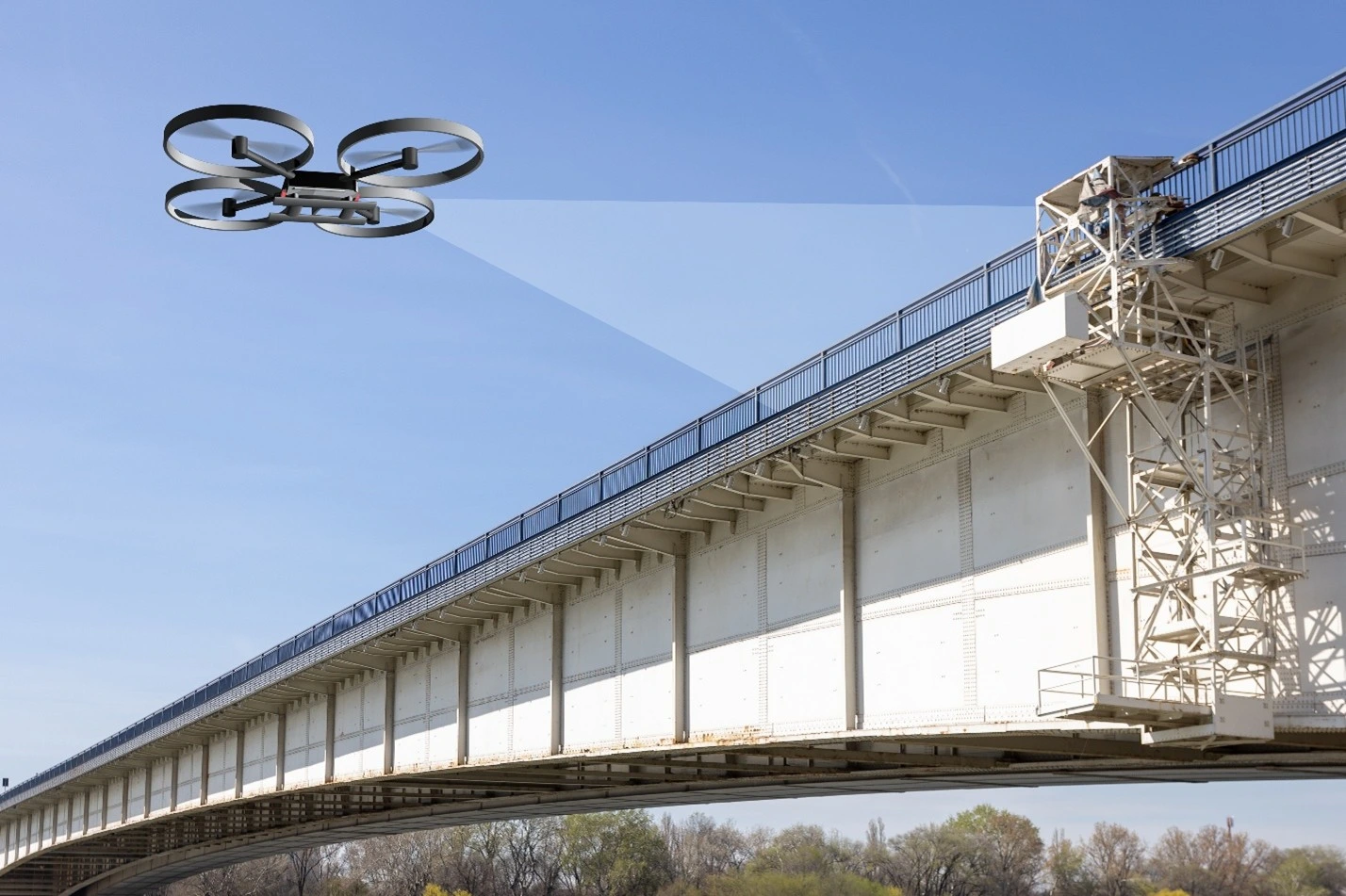
The result is friction across drone regulation and infrastructure, landing squarely on the organizations responsible for infrastructure resilience and drone utilities, municipalities, transportation agencies, and public safety operators.
Why This Matters in a Global Context?
Globally, drone markets have not evolved in a policy vacuum.
Foreign competitors have benefited from coordinated industrial policy, contributing to market dominance estimated at 70–90% worldwide. While some manufacturers assert independence from their governments, alignment with state-backed investment vehicles and national industrial strategies has produced significant price and scale advantages.
U.S. manufacturers are now expected to compete in that environment while navigating tightening public safety drone policy, aviation policy vs drone policy inconsistencies, and fragmented procurement signals.
That is not a level playing field.
And it is not how the United States has historically executed an unmanned systems national strategy when national interests are at stake.

The BEAD Global View: Enable the Transition, Don’t Just Mandate It
At BEAD Global, we work at the intersection of:
- Policy reality
- Operational reality
- Program design
From that vantage point, the issue is not whether stronger government drone regulation is appropriate.
It is.
The issue is whether today’s national drone policy framework enables the market to execute responsibly.
If the U.S. expects domestic manufacturers to deliver affordable, credible, scalable, enterprise-ready platforms, then policy must address affordability, not just compliance.
That means:
- Targeted subsidies or cost-offset mechanisms aligned with other infrastructure sectors
- Predictable, multi-year funding signals
- Procurement commitments that move beyond pilots
- Certification pathways that reward readiness, not just promise
This is not about picking winners.
It is about ensuring that aviation policy and drone policy are aligned with real-world adoption, so operators can transition without sacrificing safety, scale, or reliability.

Closing Thought: Critical Infrastructure Deserves Critical Support
The FCC Covered List update made one thing unmistakably clear:
Drones are now treated as critical infrastructure.
The next step is ensuring that the critical infrastructure drone policy reflects that reality, not just in restriction, but in enablement.
Success will not be measured by press releases, executive orders, or pilot programs.
It will be measured by whether utilities, public agencies, and public safety organizations can deploy trusted unmanned systems in compliance, at scale, and at an affordable cost while strengthening national resilience.
That is the conversation BEAD Global is here to advance.
This blog is part of a two-part BEAD Global perspective on the future of unmanned systems as critical infrastructure.
1, If Drones Are Critical Infrastructure, Policy Must Treat Them That Way, we examine why current drone policy recognizes the strategic importance of unmanned systems but stops short of enabling affordability and scale.
2, If Policy Tightens Before the Market Is Ready, Who Pays the Price? We explore the operational consequences of that gap, and what it means for the operators tasked with implementing policy on the ground. Together, these pieces are intended to move the conversation beyond compliance toward sustainability because the long-term success of any unmanned systems strategy depends not just on what is required, but on whether it can be responsibly executed.