
In the epic tale of innovation, regulation often plays the role of the unexpected antagonist, a force that tests the hero, forces adaptation, and either strengthens the hero’s resolve or brings them to their knees. In the story of BEAD Global (BEAD), our clients in public safety, infrastructure, small business, inspection services, and beyond are the heroes, flying missions that matter, supported by reliable technology and consulting guidance. Today, we face a regulatory tempest: a new ruling from the Federal Communications Commission (FCC) that may dramatically reshape the way one dominant vendor, DJI, interacts with U.S. operations, and in turn, how the entire industry of drone consulting and aerial drone operations must reposition itself.

The Ruling in Brief
On October 28, 2025, the FCC adopted a new order granting itself retroactive authority to ban wireless-transmitting devices that include radio components from companies placed on its “Covered List”. WebProNews+2DroneXL.co+2 Under this ruling:
- Devices containing parts from firms deemed a national security risk (such as DJI) may have their prior authorizations revoked—potentially impacting equipment already in use. Drone Law and Drone Attorney Assistance+1
- Starting December 23, 2025, new importation and approvals for such equipment will face automatic bans unless an “appropriate national security agency” clears them. DroneXL.co+1
- Even U.S.-authorized devices may now face retroactive decertification if their components are linked to a covered entity. The Tech Buzz+1
In short, while DJI drones aren’t banned right now, the regulatory noose is tightening, and the timing is far from ideal.

Why This Matters to BEAD Global and the Industries We Serve?
As a drone consulting company offering aerial drone consulting and drone consulting services, BEAD understands that our clients, first responders, inspection firms, T&D utilities, and small business service providers rely heavily on DJI platforms for cost-effective, mature, feature-rich capabilities. The potential disruption here is profound.
1. First Responders & Critical Missions
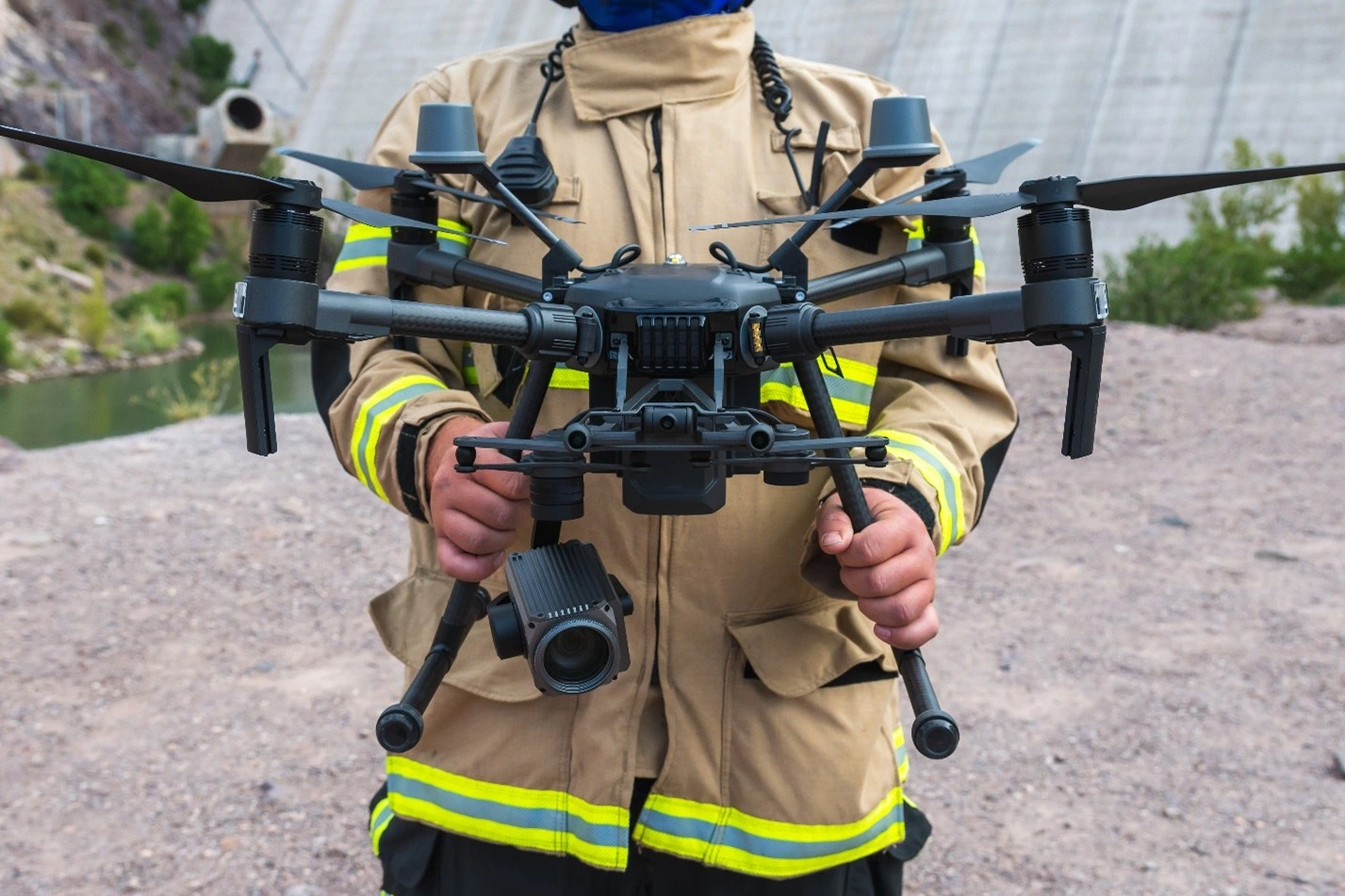
Many fire departments, law enforcement units, search-and-rescue teams, and emergency management agencies have adopted DJI drones for mission-critical aerial imaging, thermal inspections, large-scale search grids, and infrastructure oversight. Under the ruling:
- The risk arises that the platform they rely upon may become unsupported, unrepairable, or even illegal for new procurement.
- The impact on time-sensitive missions is huge. Imagine a wildfire in progress, and a drone platform isn’t reliable or parts are delayed because of regulatory entanglement. For BEAD’s clients, that’s not just a cost issue; it’s a risk to life and property.
2. Small Businesses & Infrastructure Inspectors
Small businesses in drone services operate on razor-thin margins. DJI hardware has been the workhorse: reliable, high-capability, a large ecosystem of availability, accessories, and training. Now:
- With the ruling, future DJI hardware may not be able to be imported or used, making future fleet growth tenuous.
- Switching to alternatives means higher cost, fewer proven workflows, fewer accessories, and less training history. This is especially burdensome for small operators who cannot absorb large capital swings.
- Contract procurement may get complicated: agencies or clients might require NDAA-compliance or non-Chinese hardware, thereby excluding DJI without advance notice.
3. Drone Consulting & Aerial Drone Consulting Firms
As a drone consulting company, BEAD Global must advise clients on regulatory compliance, risk mitigation, hardware planning, and procurement strategy. The ruling creates:
- A looming need for contingency planning: existing DJI fleets might function today, but future support, firmware updates, and parts supply may be uncertain.
- Increased advisory complexity around government drone regulations, clients will ask: what happens if my DJI gear becomes unserviceable, unsupported, or even banned? The question of “what if” must now be part of every consulting proposal.
- Opportunity: BEAD can lead clients through this regulatory fog, guiding hardware diversification, workflow transition planning, and contractual language to protect their operations.
Why the Timing Is Especially Poor ?
The regulatory risk is real, and the timing couldn’t be more inconvenient. Here’s why:
- There is no ready alternative that matches the maturity, feature set, and ecosystem of DJI for many applications, especially at the cost point small businesses and public agencies expect.
- Questing for an alternative means retraining pilots, rewriting SOPs, qualifying new hardware, and developing spare-part inventories, all with budget, timeline, and operational disruption.
- Many clients are mid-flight in large inspection programs, infrastructure roll-outs, or public safety adoption. Disrupting hardware now means major project risk.
- The rule creates uncertainty, not just about new procurement, but about whether existing fleets will be supported, and for how long. When hardware support gets shaky, warranty claims, spare parts, and firmware updates become liabilities.
From a BEAD Global consulting lens: this is exactly when our clients need certainty; instead, they are facing regulatory ambiguity.

What BEAD Global Recommends (and Why)
In our role as a leading drone consulting partner, we are advising the following strategic actions for clients today:
1. Audit your current DJI fleet and dependency.
Identify: how many DJI units do you have? What models? Are firmware updates still being issued? What spares and support infrastructure exists? Do you have alternative brands in rotation? This gives you the baseline for risk.
2. Introduce contingencies now.
Begin qualifying alternate platforms, not necessarily to flip overnight, but to ensure you have a fallback. Even if you continue with DJI, maintaining a secondary hardware stream reduces risk.
3. Review your procurement, contracts, and budgets.
Upgrade your drone procurement language to reference regulatory risk: what happens if a vendor is decertified? What are your warranty, parts, and upgrade commitments? How will the transition cost be handled? For public-sector clients, ensure that any tendering or compliance language reflects this regulatory shift.
4. Communicate with stakeholders, project owners, first-responder partners, and business clients.
Assure them you’re proactively managing risk: that you’re working with a strategic advisor focused on continuity of mission.
5. Monitor regulatory developments daily.
With the FCC and national security agencies under pressure, the situation may evolve rapidly. New bans, firmware restrictions, and import bans could arrive with little notice. Staying ahead is part of aerial drone consulting best practice.

A Call to Action
For companies, agencies, and small businesses whose operations depend on drones—but who haven’t yet factored in the possibility of a major vendor disruption—now is the time to act. The clock is ticking toward December 23, 2025, and the regulatory landscape is shifting beneath our feet.
At BEAD Global, we don’t just supply hardware or fly drones—we partner with our clients to build resilient, future-proof aerial operations. If you haven’t already reviewed your DJI dependency, begun vendor diversification, or updated your drone operations strategy to include regulatory risk, we strongly encourage you to do so.
Reach out to BEAD Global today to schedule a strategic review of your drone fleet, procurement roadmap, and regulatory risk plan. Let’s move from waiting for disruption to preparing for it. Because in this hero’s journey, your mission can’t wait for the plot twist to land.
Thank you for trusting BEAD Global as your strategic drone consulting partner. Together, we’ll ensure your hero’s journey keeps flying, whatever the regulatory skies bring next.
Schedule a risk-assessment call with BEAD Global and future-proof your drone operations.